
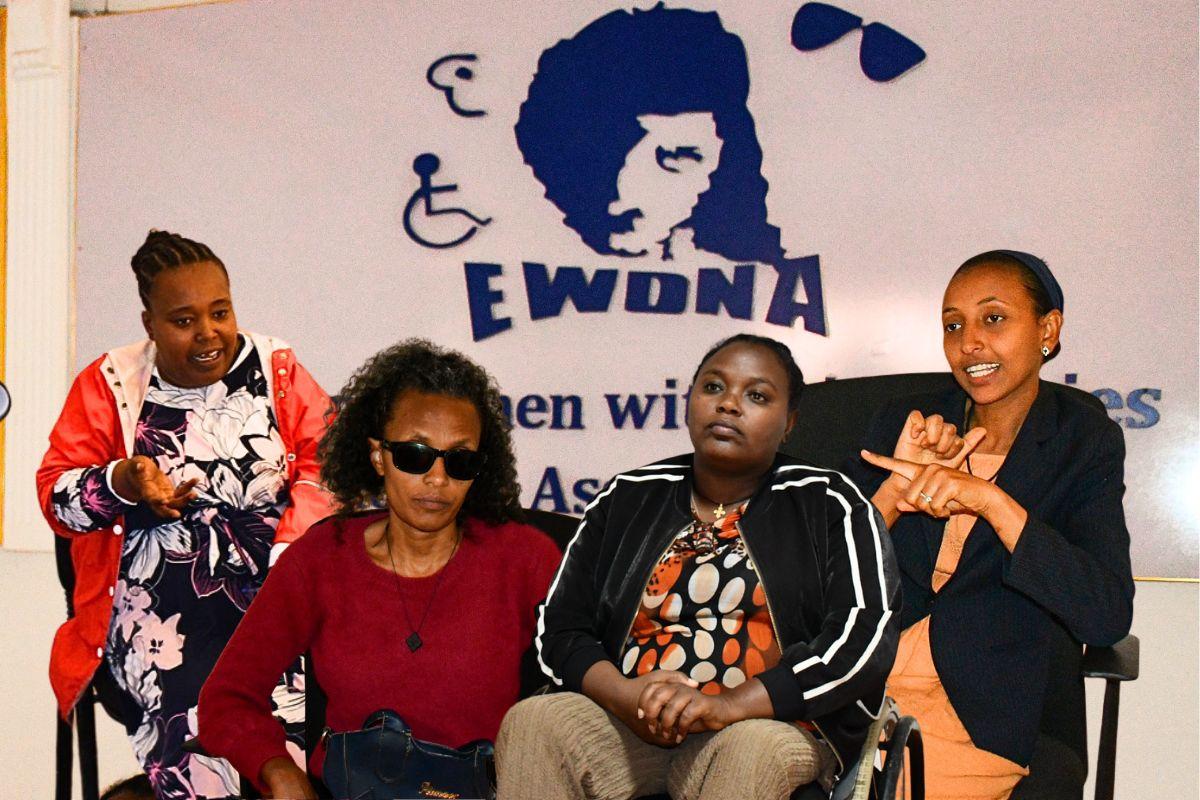
In Ethiopia’s seventh national election in June, four women who once believed politics was closed to people like them found themselves right in the middle of it. They were informed voters, and for the first time, trained election observers too. Each one is a member of the Ethiopian Women with Disabilities National Association (EWDNA) and completed this year’s trainings on disability rights, political participation, and election observation. EWDNA is one of Demo Finland’s two partner organisations in Ethiopia. Demo Finland has supported the political participation of women in Ethiopia in collaboration with the Network of Ethiopian Women’s Associations (NEWA) and EWDNA since 2019.
Here, four election observers tell in their own words what has changed for them.
Lemlem Dadi
Deaf, Special Needs Education graduate
Bureau of Women and Social Affairs
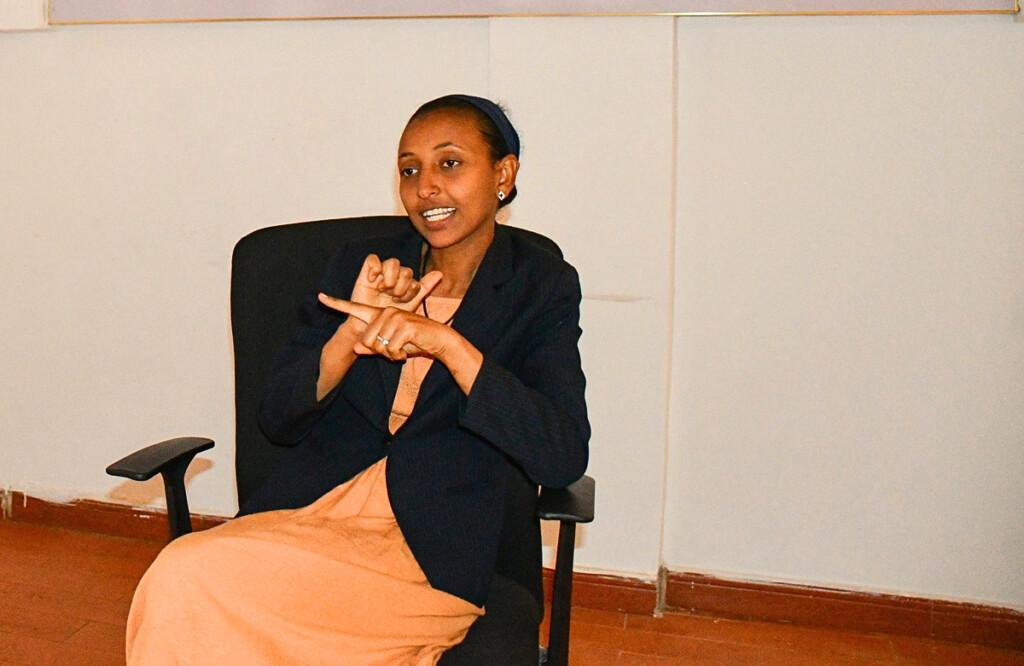
Lemlem grew up in Afar, where there was almost no way to learn Sign Language, so she finished grade 12 without ever learning to sign. It was only after she moved to Addis Ababa, studying part-time through high school and university, that she finally learned Sign Language. “Before that,” she recalls, “I kept losing information, I couldn’t communicate with people, and I felt so lonely and dizzy because I had no one to sign with for so long.”
Today, fluent and active in EWDNA’s programs, Lemlem completed the training on disability rights, political participation and the rights of women with disabilities. “I have no words for what I gained,” she says. “I became rich with knowledge about my rights. I had no courage before, but this training taught me the value of political participation and the value of my vote. I passed that on to deaf people in my own neighbourhood too.” She now plans to travel to Afar to teach the Deaf community there about disability rights and political participation.
The election observation training was the real turning point for Lemlem. It moved her from a non-voter to a voter, and then to a certified observer of the national election. “I saw many positive signs of inclusivity in this election, and I also saw where accessibility still fails,” she says. She believes her observation report will help the National Election Board of Ethiopia make future elections more inclusive, and she counts herself among the luckiest women in this year’s election.
Zewdayehu
Wheelchair user, Graduate in Language and Literature
Ministry of Women and Social Affairs
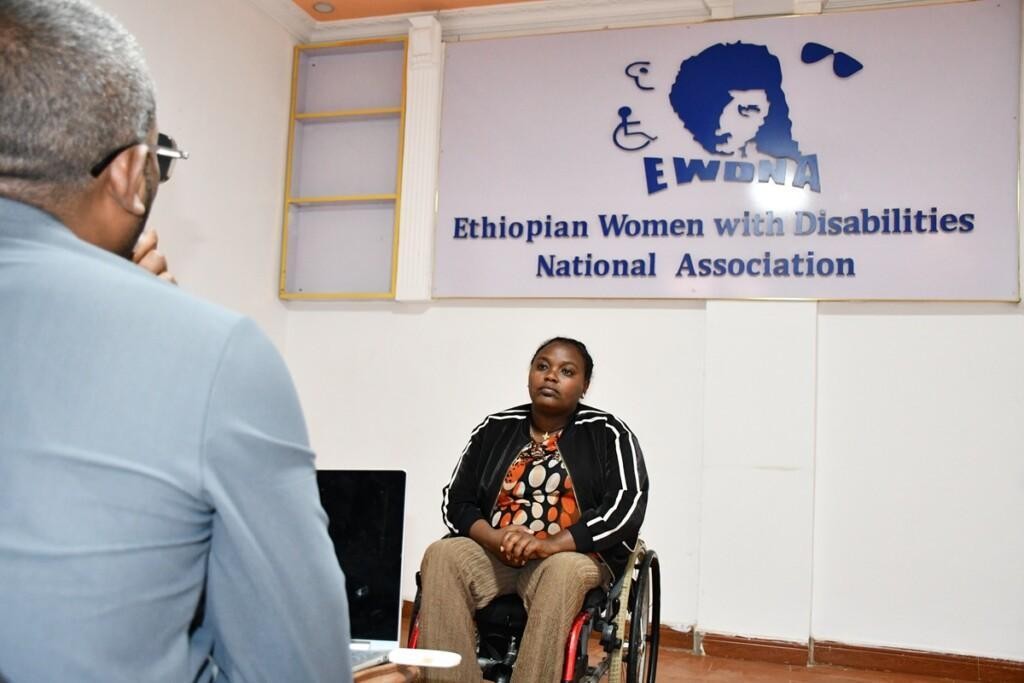
Disabled from grade 8, Zewdayehu was carried to school by her mother and family members because no wheelchair was available. Only around grade 11 did neighbours, teachers, and family finally secure her one, though it was low quality and broke down soon after in her remote area. University brought new barriers too. Inaccessible classrooms forced her to change departments, and after graduating she spent more than a year as a street vendor, degree in hand, before finally being hired at the Ministry of Women and Social Affairs.
“Now I am a person of advocacy,” she says, crediting the trainings organised by EWDNA. “Before, whenever my rights were violated, I just accepted it and never challenged it. Now I know my rights, and I have become a real advocate for women with disabilities.” This year she went beyond voting to serve as an official election observer, having completed the election observation training.
Adisalem Kenenisa
Crutch user, Diploma in Accounting
Coordinator of Observers with Disabilities, EWDNA
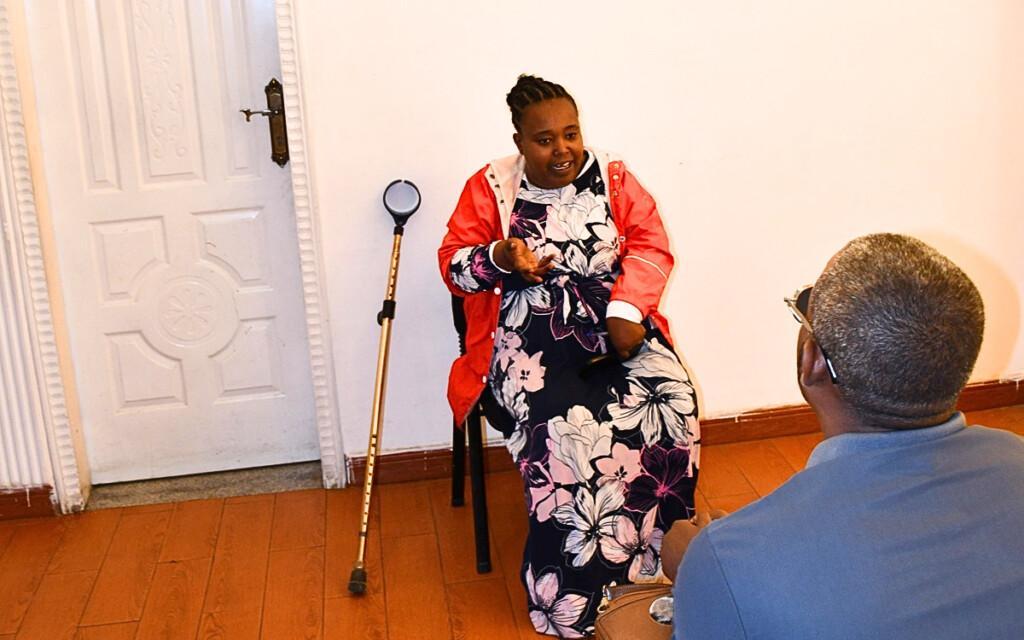
Adisalem was refused admission to school because of her disability, and when a school finally accepted her, its environment was inaccessible. “Those challenges shaped me to become strong,” she says. Through EWDNA’s trainings on disability rights and political participation, she says her whole understanding of politics changed. “Until these trainings, I believed politics was a privilege reserved for people without disabilities. It was only through this program that I learned people with disabilities can also participate as both voters and candidates.”
This year, Adisalem did more than vote. As EWDNA’s coordinator of observers with disabilities, she led a team of 15 fellow observers deployed across the seventh national election. “It was a fantastic experience,” she says. “I started to trust myself as someone genuinely useful to my society.”
Senayt Yirga
Blind, Graduate in History, Dila University
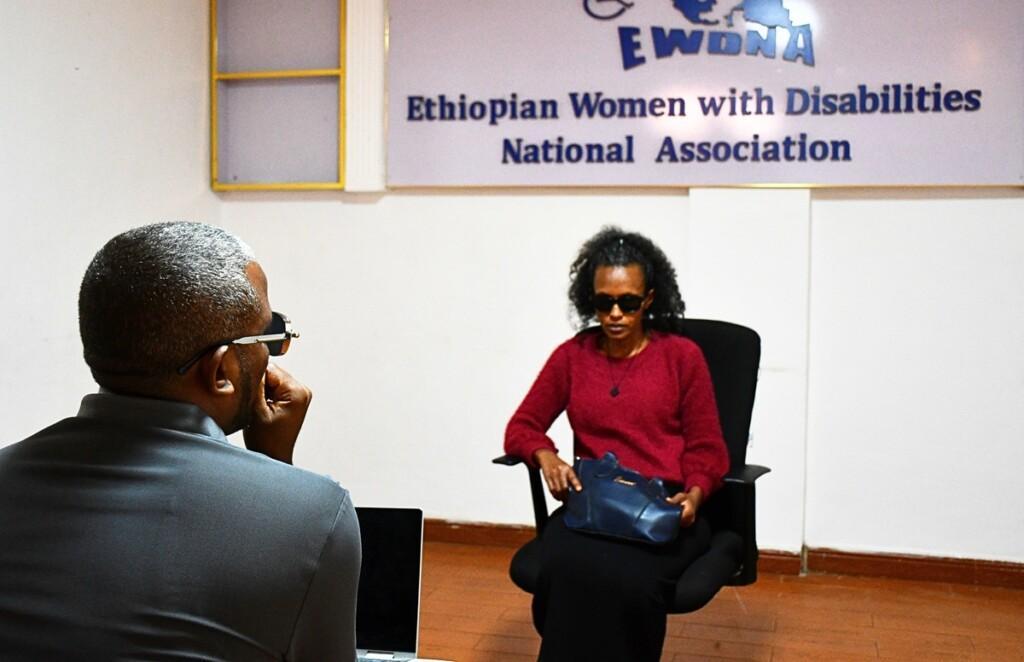
Senayt attended Sebeta Blind Boarding School, and she says the full weight of her blindness only became real once she left it to live independently. Landlords refused to rent to blind tenants, and with no accessible learning materials, she and her peers were among the poorest of the poor. She still managed to complete high school and a university degree.
As an EWDNA member, Senayt describes this year as a turning point, thanks to the trainings on disability rights and political participation. “My awareness of politics changed completely,” she says. “I became not only a voter but an observer in the seventh national election.” She points with pride to concrete reforms she witnessed this cycle: a reduced signature requirement for women candidates with disabilities, a special voter registration marker giving disabled voters priority in queues, and stronger financial incentives for parties to engage women with disabilities as members, leaders, and candidates. “This was a fantastic year for inclusive political participation, especially for women with disabilities.”
In their own words
Four different disabilities, four different life stories, but one shared turning point. Women who once saw politics as a space closed to them left this program as voters, advocates, and certified election observers, and one of them even led a team of 15. Lemlem, Zewdayehu, Adisalem, Senayt, and the many other EWDNA members have shown, in just one election cycle, what becomes possible when women with disabilities are given the knowledge and the platform to claim their rights.
The National Election Board of Ethiopia appointed 200 women with disabilities as election observers and polling station coordinators. This was an outcome of Demo Finland and its local partners’ work to support the political participation of women with disabilities. EWDNA and NEWA trained the women appointed to these roles, who have also participated in other trainings organised by our program in previous years.